Entry · Ref OSMW0MHM
ADA Handicap Easily Accessible Portable Toilet Rental: What Federal Standards Cover
- Posted
- 2026-09-26
- Last amended
- 2026-09-26
- Account
- @johnnysmzk603
When individuals ask whether they require an ADA handicap accessible mobile toilet, they are usually trying to solve an extremely practical problem. A festival coordinator intends to prevent omitting guests. An institution or church is preparing an outside occasion. A contractor is attempting to recognize whether the very same guidelines use on every site. A property manager is aligning an ada portable commode leasing and intends to obtain it right prior to shipment day.
The tough part is that mobile washroom conformity gets discussed in a great deal of loosened, confident language. You will certainly listen to individuals claim an unit is "ADA design," "mobility device friendly," or "compliant enough." Those phrases do not inform you a lot. What issues is which government standards use, the number of obtainable units are needed, and whether the device is really usable once it is dropped on the ground.
At the government degree, the managing standard is the 2010 ADA Standards for Accessible Layout, as analyzed by the united state Gain Access To Board and the Department of Justice. That is the foundation for recognizing what an ada obtainable mobile restroom need to cover. If you are renting portable toilets for public use, temporary occasions, or various other general-access setups, that is the place to start.
The government regulation individuals usually miss
The most typically missed factor is easy: ease of access is not only regarding the restroom device itself. It is additionally concerning where it sits and just how somebody reaches it.
A great deal of mobile commode configurations stop working in the real world not due to the fact that the vendor provided the wrong shell, yet because the accessible device ended up across soft ground, behind a curb, at the end of a steep shift, or with too little handling space at the door. On paper, a person got an ada compliant mobile toilet. On website, the course made it unusable.
Federal requirements treat those problems as component of ease of access, not as side notes. An available portable unit has to have an available path and entrance, and any type of needed ramps or landings should adhere to the suitable ADA technical needs. That matters at a road reasonable, in a park, at a seasonal location, and at any type of temporary occasion where devices are organized in a cluster.
This is one reason the expression ada mobile restroom can be misinforming when it is used delicately. It sounds like conformity lives completely inside the walls of the device. It does not. Accessibility begins prior to the door opens.
What standard governs an ADA portable toilet rental
For basic mobile bathroom rentals in the United States, the regulating federal accessibility criterion is the 2010 ADA Specifications for Accessible Design. The Gain access to Board and the Department of Justice are the essential government interpreters in this area.
That appears dry, yet it has a sensible effect. If you are contrasting companies for an ada portable bathroom service, you are not just shopping for a larger unit. You are looking for an unit and placement that straighten with federal access policies. A supplier may define stock as ada-compliant portable bathrooms or ada certified mobile commodes, but that tag only implies something if the needed features and website conditions are actually in place.
The criteria additionally explain that short-lived settings do not obtain a freebie simply since they are short-lived. That turns up regularly with outside weddings, fairs, sports competitions, shows, charity runs, and pop-up work areas that serve the general public. A brief event can still cause the demand for available mobile sanitation.
The 5 percent guideline for clusters of portable commode units
If mobile single-user toilet units are given in a collection, a minimum of 5 percent of the units in each collection need to be accessible. The Accessibility Board has made clear that this applies even at short-term events.
That one sentence clears up a massive quantity of confusion.
Some coordinators think that if they have one easily accessible device somewhere on the residential property, they are covered. Federal scoping is much more certain than that. The demand applies to each collection. If you spread out mobile toilets throughout a venue, each grouped bank of systems has to be thought about on its own.
That point matters for big sites. Image a fairground with one cluster near the entry, an additional by the food location, and https://jaredqssf504.brightsora.com/posts/ada-mobile-bathroom-accessibility-what-rental-suppliers-and-clients-required-to-know an additional near a performance phase. The reasoning of the policy is noticeable once you stand in the shoes of a guest with mobility limitations. If the only ada handicap available mobile toilet is at the front gateway, but the guest is spending the evening near the stage on the far side of the premises, access is not meaningful.
There is likewise a useful planning lesson right here. The easily accessible systems should be developed into the site map initially, not dealt with as final add-ons. When they are a second thought, they typically wind up put any place there is leftover area, which is normally the worst feasible location for course accessibility and maneuvering.
What makes a mobile commode obtainable under government standards
People typically desire a short solution right here, however the truthful solution is that numerous technical aspects function together.
An available mobile device need to be understood the International Sign of Ease Of Access. That noting is not decoration. It tells individuals and team which system is intended to give obtainable use. On an active site, great identification saves complication and decreases the opportunity that the obtainable unit gets dealt with like just another common unit.
Beyond recognition, the unit has to satisfy toilet-room technical demands. Federal support points to component clearances, turning room, and door handling clearances, along with applicable grab-bar and water-closet clearance regulations. Those terms may sound very technical, yet they all talk with one functional concern: can an individual go into, place themselves, transfer, and use the washroom with affordable safety and dignity?
Turning area matters because size alone is not the same as functionality. An area can feel "larger" and still not sustain the activities a user needs to make. Door navigating clearance issues due to the fact that the hardest component of using a washroom is occasionally not the indoor fixture, yet managing the door while going into or leaving. Get bars and fixture clearances matter for balance, transfer, and stability.
That is why the old shorthand, "simply buy the big one," is not reliable. A bigger shell is not immediately an ada compliant easily accessible portable bathroom. Federal criteria have to do with function, not marketing descriptions.
Temporary events still count
This is one of the locations where well-meaning organizers obtain captured unsuspecting. They think ease of access rules are mostly targeted at permanent structures and lasting facilities. For portable bathroom clusters, that is not just how government scoping works.
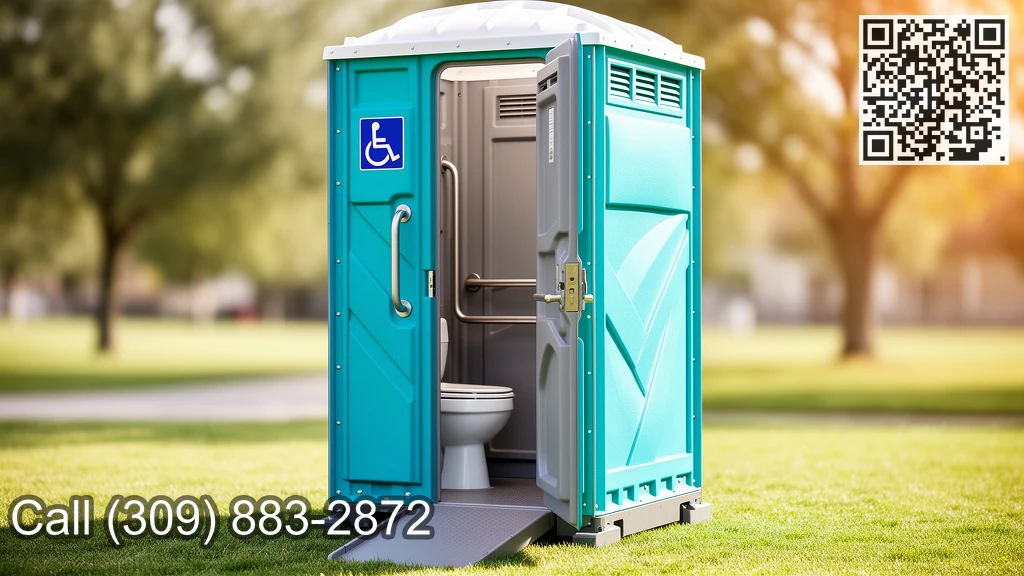
The Accessibility Board has especially claimed the 5 percent accessible-unit rule uses even at short-term occasions. That means the duration of the occasion does not eliminate the need. A weekend festival, a one-day fundraising event, or a seasonal celebration might still require ada compliant portable bathrooms in the correct proportion, with the appropriate accessibility to and into the unit.
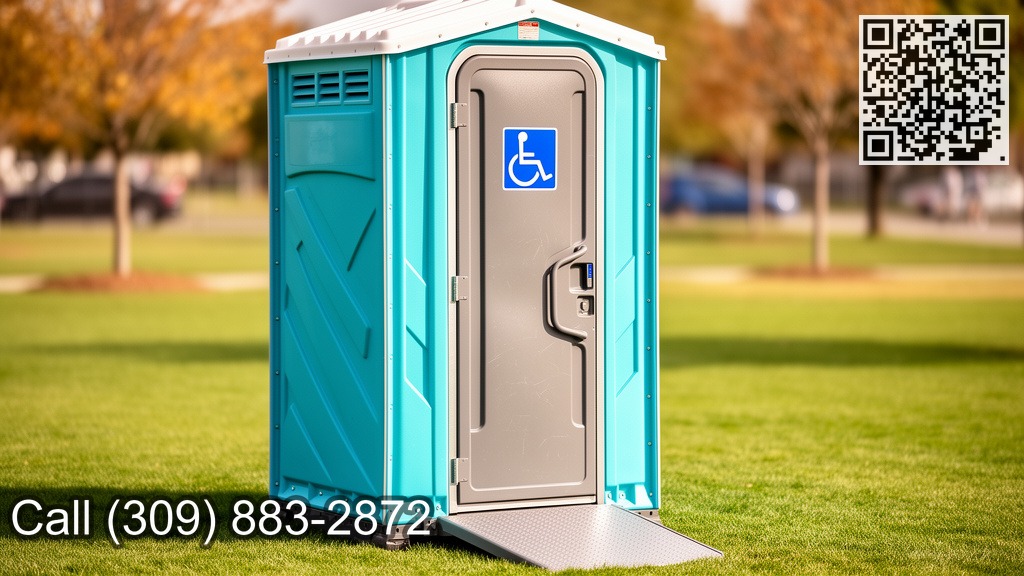
I have actually seen organizers invest weeks on parking, ticketing, secure fencing, and power, then leave toilet access to the last vendor telephone call. That is where preventable mistakes happen. A website can have sufficient bathrooms total and still fall short individuals that need an available choice close-by and on a usable route.
Temporary sites additionally tend to present ground-condition troubles that long-term websites do not. Yard, crushed rock, mud, momentary flooring, and irregular shifts can turn an or else suitable ada mobile bathroom into something that is practically present but practically unreachable. Federal criteria do not quit at the unit door, and neither should event planning.
Placement can make or break compliance
This is where field judgment matters.
Suppose you lease an ada-compliant portable toilet and area it beyond a harsh patch of ground, over a lip developed by floor coverings, or at the edge of an area where rainwater pools. On a site map, you have examined package. On the ground, the route may no more be accessible in any type of significant way.
The federal requirements need an accessible path and entrance. If ramps or touchdowns are required, those components additionally have to fulfill ADA technical demands. That tells you 2 things. Initially, distribution alone does not end up the job. Second, site conditions need to be examined before the vehicle gets here, not after the device is embeded in place.
A lot of irritation can be prevented by walking the exact course a visitor would use. Beginning where the general public goes into or collects. Comply with the course to the washroom area. Try to find inclines, shifts, bottlenecks, and unstable surface areas. Then consider exactly how the system door will open up and whether the approach location leaves sufficient room to maneuver. Those are not abstract conformity exercises. They are what figure out whether someone can utilize the bathroom independently.
Here is a short list that aids capture the most common blunders prior to delivery day:
- Confirm how many portable commode collections the site will certainly have, not simply the complete variety of units.
- Make sure each cluster has actually the needed available system count.
- Verify that the obtainable unit will certainly be marked with the International Symbol of Accessibility.
- Walk the path to the device and check the entrance area, including any kind of ramp or touchdown that may be needed.
- Ask the supplier and site team to review placement with each other before last set-down.
That brief conversation in between organizer, vendor, and website lead is usually the difference in between a compliant setup and a shuffle on opening up morning.
What federal standards do and do not state regarding building sites
Construction job includes an important wrinkle.
There is a distinction in the ADA criteria history for mobile bathroom units at construction sites utilized exclusively by construction personnel. The older 1991 criterion included an exemption from the portable-toilet availability scoping requirement for those exclusive-use building settings. For basic mobile bathroom services, the accessible-unit requirement remains.
This is where individuals can obtain tripped up by half-remembered advice. A person listens to that "building and construction sites are excluded" and repeats it broadly. That is as well simplistic. The confirmed government context is narrower than that. The exception kept in mind in the 1991 criterion was linked to mobile commode devices at building sites utilized specifically by building personnel. That is not the same as a covering exemption for every mobile toilet setup connected in some way to construction activity.
If the portable commodes become part of public usage, or component of a setting outside that details special construction-personnel context, you should not think the exemption applies. This is among those areas where wide presumptions create threat quickly.
It is likewise worth keeping in mind that accessibility obligations are being imposed in a wider conformity setting. Federal ADA task has actually not slowed down. One indicator of that wider climate is the Division of Justice advice provided in April 2026 expanding the due date for certain state and local government web and mobile ease of access guidelines to April 26, 2027 for larger entities. That guidance is not concerning portable commodes, yet it does reflect a recurring and energetic conformity landscape. The practical takeaway is that ease of access is not a dead letter problem. It stays very much active across sectors.
The language suppliers utilize, and what you need to ask them to mean
The portable hygiene market uses many overlapping terms. You will see expressions such as ada certified portable toilet, ada certified portable restrooms, ada-compliant portable restrooms, ada portable bathroom, and ada compliant portable toilet. Often they are used thoroughly. Sometimes they are little greater than sales shorthand.
What you desire is not just a tag, however confirmation that the rental configuration addresses the federal factors that matter.
Ask whether the device provided is meant to please obtainable mobile bathroom requires under the 2010 ADA Specifications for Accessible Layout. Ask just how the system is recognized. Ask whether the delivery team has experience putting available units on temporary websites with course problems. Ask who is responsible for last positioning if the site problems are not appropriate on arrival.
That last inquiry is particularly important. In practice, toilet suppliers, event planners, and homeowner frequently each think someone else is managing access details. The supplier might think the customer selected the place with route problems in mind. The customer might presume the vendor will reject a negative area. The site manager may presume the obtainable device can just be moved later. By the time everybody realizes there is an issue, the occasion is underway.
An empathetic technique helps below. Availability planning goes far better when it is treated as solution, not as a nuisance. The goal is not to "cover responsibility" in the abstract. The goal is to ensure a person that requires an available toilet can discover it, reach it, enter it, and use it without excessive trouble or embarrassment.
Common side situations that are worthy of even more thought
A single available device at the far edge of a big place is a timeless difficulty place. So is breaking washrooms into several collections and forgetting that the 5 percent regulation applies by cluster. One more usual issue is positioning an obtainable unit where assistance automobiles can reach it easily, but customers cannot.
Weather can reveal weak preparation fast. A route that appears acceptable on a completely dry arrangement day can degrade after rainfall. Soft ground, rutting, and pooled water can threaten access even when the unit itself is the proper kind. The federal standards do not transform with the forecast, so momentary websites require a little humbleness and back-up thinking.
The identification problem is more important than some teams realize, also. If the device is not plainly marked with the International Icon of Accessibility, guests might waste time opening multiple doors, staff might direct them improperly, and basic units may become crowded while the easily accessible system goes undetected. Clear noting is a basic yet purposeful part of usability.
Choosing the appropriate way of thinking for an ADA portable toilet rental
If I needed to minimize the government requirement to one sensible mindset, it would certainly be this: believe in regards to the whole individual experience, not just the leased object.
A compliant setup is not developed by purchasing one larger bathroom and calling it done. It originates from matching unit matter to cluster matter, making certain the easily accessible units are really recognizable, and placing them where the path and entry operate in actual conditions. It likewise indicates understanding where the minimal construction-site exemption historically fits, and where it does not.
That strategy tends to transform the top quality of intending immediately. Rather than asking, "Do we require one unique device?" the better questions become, "The amount of clusters do we have? Which systems in each cluster are accessible? Can a guest reach them on an easily accessible path? If a ramp or touchdown is needed, has that been addressed under ADA technical demands? Will the entry and interior clearances support actual use?"
Those are much better concerns due to the fact that they are grounded in the standards that actually govern.
What this implies for coordinators, residential property supervisors, and renters
For most general-use leasings, the takeaway is uncomplicated. If you are arranging mobile toilets for the public or for a short-lived occasion, federal access standards become part of the job. At least 5 percent of portable single-user toilet devices in each collection should be accessible. The accessible system must be related to the International Icon of Access. It has to have an available course and entrance, and any needed ramps or landings need to follow ADA technical demands. The system should likewise meet the appropriate toilet-room technological requirements, including component clearances, turning area, door steering clearances, and applicable grab-bar and water-closet clearance rules.
That is the government structure. Whatever else, the organizing, shipment timing, ground prep, and placement coordination, need to support it.
Handled well, an ada handicap available portable toilet is not a challenging add-on. It is a standard component of making a site usable genuine people. And when you have seen someone get to an occasion, spot the available system conveniently, travel to it without obstacles, and utilize it without having to request help, the point of the standards becomes really clear. Availability done correctly does not promote itself. It simply permits people to take part on more equal terms.
 Ask ChatGPT
 Ask Grok
 Ask Perplexity
 Ask Claude
 Ask Google AI
 Ask You